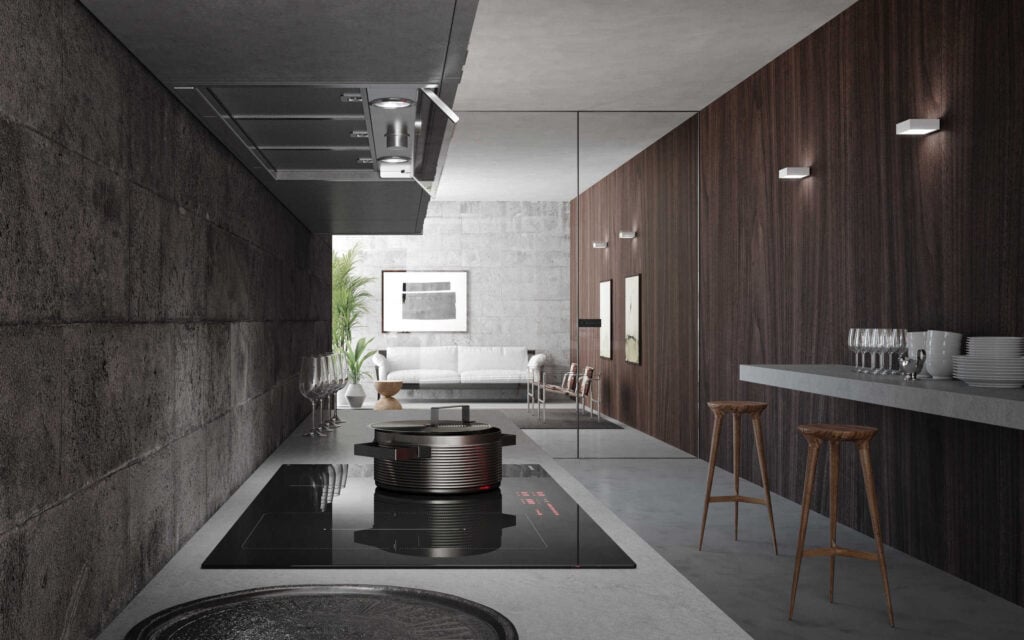
Modern kitchens are no longer just places to cook — they’re where life happens. Morning coffees, family catch-ups, late-night snacks, and weekend entertaining all unfold here. And as kitchens become more open, stylish, and multifunctional, bulky appliances that disrupt the look are quickly falling out of favor. That’s exactly why the integrated cooker hood has become such a popular choice for today’s homes.
If you love the idea of a clean, streamlined kitchen without sacrificing fresh air and performance, this guide is for you. Let’s explore how integrated cooker hoods work, why they’re transforming kitchens, and how to choose the right one for your home.
What Is an Integrated Cooker Hood?
An integrated cooker hood is a ventilation system that’s built directly into your kitchen cabinetry. Unlike traditional chimney or island hoods, it stays hidden behind cupboard doors or pulls out discreetly when needed.
The result?
✔ A clutter-free look
✔ Efficient extraction
✔ Seamless integration with modern kitchen design
It’s ventilation that works quietly in the background — exactly how many homeowners like it.
Why Integrated Cooker Hoods Are Gaining Popularity
Imagine walking into a beautifully designed kitchen where nothing interrupts the flow — no bulky metal hood, no visual noise, just clean lines and smart storage. That’s the appeal of integrated cooker hoods.
Key Benefits at a Glance
- Minimalist appearance that blends with cabinetry
- Space-saving design, perfect for compact kitchens
- Effective removal of steam, grease, and odors
- Ideal for open-plan living spaces
For homeowners focused on style and function, an integrated cooker hood feels like a natural evolution.
How an Integrated Cooker Hood Works
Despite its discreet appearance, an integrated cooker hood is surprisingly powerful.
Two Ventilation Options
- Ducted integrated cooker hood
Extracts air and vents it outside. Best for heavy cooking and homes with external duct access. - Recirculating integrated cooker hood
Filters air through grease and charcoal filters before releasing it back into the kitchen. Ideal for apartments or homes without external venting.
Both options are effective when chosen and installed correctly — the key is matching the hood to your cooking habits.
Types of Integrated Cooker Hoods
Not all integrated cooker hoods are the same. Here are the most common styles you’ll encounter:
🔹 Fully Built-In Cooker Hoods
These are completely hidden behind cabinet doors and only visible when switched on. They’re perfect for homeowners who want total visual simplicity.
Best for:
- Minimalist kitchens
- Clean, handle-less cabinetry
- Subtle design lovers
🔹 Pull-Out (Telescopic) Integrated Cooker Hoods
These slide out when needed, increasing the extraction area during cooking.
Why homeowners love them:
- Extra efficiency when extended
- Still discreet when closed
- Affordable and practical
They’re a fantastic middle ground between performance and invisibility.
🔹 Integrated Induction Hobs with Extractors
The most modern option, combining cooking and ventilation in one unit. While more premium, they’re ideal for kitchen islands and ultra-modern layouts.
What to Look for in an Integrated Cooker Hood
Choosing the right integrated cooker hood is about balancing performance with subtlety.
💨 Extraction Power
Measured in m³/h, this tells you how much air the hood can move.
- Light cooking: 300–500 m³/h
- Regular cooking: 600–800 m³/h
- Heavy cooking: 900+ m³/h
More power means better air quality — especially for frying and spice-heavy dishes.
🔇 Noise Levels
Because integrated cooker hoods sit close to cabinets, quieter operation matters. Look for models under 65 dB for comfortable everyday use.
🧼 Filter Quality & Maintenance
- Metal grease filters should be removable and washable
- Charcoal filters (for recirculating models) need replacing every 3–6 months
Easy maintenance keeps your hood efficient and long-lasting.
📏 Size & Fit
Always match the width of the hood to your cooktop. A hood that’s too small won’t capture steam effectively, no matter how powerful it is.
Real-Life Kitchen Story: Small Space, Big Difference
Emma, a homeowner in Leeds, recently renovated her compact kitchen. “I wanted it to feel bigger and calmer,” she says. “A traditional hood would’ve ruined the look.”
She chose a pull-out integrated cooker hood hidden inside her cabinetry. The result?
- No visible clutter
- Fresh air while cooking
- A kitchen that feels larger and brighter
“It’s one of those things you don’t notice — until you really appreciate how well it works,” she adds.
Installation Tips for Best Results
Even the best integrated cooker hood won’t perform well if installed incorrectly.
✔ Do This
- Install at the recommended height (typically 65–75 cm above electric hobs, 75–85 cm above gas)
- Use short, straight ducting for ducted models
- Have it professionally installed for optimal airflow
✘ Avoid This
- Blocking airflow with poorly fitted cabinetry
- Skipping regular filter cleaning
- Choosing style over adequate power
How to Get the Most Out of Your Integrated Cooker Hood
Small habits make a big difference:
💡 Turn it on before you start cooking
🧽 Clean grease filters every 4–8 weeks
🔄 Replace charcoal filters on schedule
🌬 Use boost mode during intense cooking
These simple steps ensure consistent performance and cleaner air.
Final Thoughts: Is an Integrated Cooker Hood Right for You?
If you value a clean, modern kitchen and want effective ventilation without visual clutter, an integrated cooker hood is an excellent choice. It blends seamlessly into cabinetry, keeps air fresh, and supports the lifestyle of today’s open, design-led homes.
From compact apartments to contemporary family kitchens, integrated cooker hoods prove that powerful performance doesn’t need to shout — sometimes, the best solutions are the ones you barely notice.
And when your kitchen feels calm, fresh, and beautifully balanced? That’s when cooking truly becomes a pleasure.
About the Author